Blog top > Articles from March 2026 > Music That Keeps Shifting — Listening to C. P. E. Bach
This is a blog about this site, which introduces the lesser-known Emanuel Bach (C. P. E. Bach). This English version was translated from Japanese one by ChatGPT.
Music That Keeps Shifting — Listening to C. P. E. Bach
I will also reproduce here what I originally posted as a Medium article. It compares C. P. E. Bach’s music—where new phrases emerge one after another in the middle of a theme and the emotional expression continues to shift—with that of J. S. Bach and the Classical composers.
Why C. P. E. Bach still sounds unsettled — and why that makes him feel alive today.
Baroque music is often described as music for God. In particular, the works of J. S. Bach seem to inhabit a world shaped by order and necessity. When I listen to the music of his son, Carl Philipp Emanuel Bach, however, I hear something different — something more directly human.
What about the Classical style represented by Haydn and Mozart? It is often described as the moment when music becomes fully human. Yet to my ears, Classical music sometimes seems to inhabit a carefully balanced and rational world — one that suggests an idealized image of human nature. Against that background, the music of C. P. E. Bach feels strikingly alive: unstable, shifting, and unpredictable.
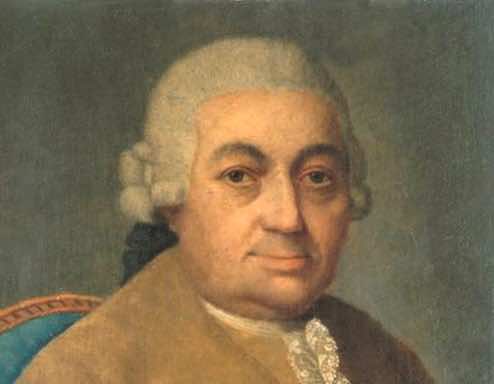
Carl Philipp Emanuel Bach — often abbreviated as C. P. E. Bach — is commonly placed between the Baroque and Classical eras, sometimes labeled a “pre-Classical” composer. He is frequently introduced as an influence on Haydn or Beethoven. But when I actually listen to his music, he does not sound like a transitional figure. Instead, I hear a musical language in which new phrases emerge before earlier ones have settled, and emotional gestures continue to shift even while a theme is being presented. His music seems to stand apart both from the ordered world of his father and from the stable melodic lines of the Classical style.
This essay is not a technical analysis. Rather, it is an attempt to describe how this music sounds — and feels — from the perspective of listening.
When Melody Remains a Shape — or Becomes a Change
These impressions become clearer when we listen closely to the music itself. One of the first differences I notice lies in the nature of melody.
In the works of Haydn or Mozart, themes tend to have clear outlines. After hearing them a few times, they naturally remain in memory. This does not mean that I consciously try to memorize them; rather, their shapes settle into the ear almost by themselves.
In C. P. E. Bach, by contrast, new phrases often appear before the theme has fully stabilized. Emotional gestures shift unexpectedly, and the melody resists becoming a fixed line. For example, listen to roughly 0:30–1:00 of the following performance. Notice how the melodic line begins to shift before it fully settles into a stable shape.
It is not only harmony that changes. The melody itself seems to move on before it comes to rest. The theme keeps shifting before it can leave a stable imprint. I can recognize that I have heard the piece before, yet when asked what the theme actually was, I struggle to recall it clearly.
Perhaps this is not a difference in listening habits but a difference in the music itself. When I listen to Classical works, the shape of the melody remains; when I listen to C. P. E. Bach, what stays with me is the memory of change.
At first, such music can feel elusive. Yet its very difficulty to grasp may be what makes it feel fresh. In Classical music, listening often accumulates through recognition — remembering themes as they return. With C. P. E. Bach, each hearing seems to create a new experience, as if the music begins to move again from within itself.
Music That Resolves — and Music That Returns
These differences also appear in the way the music ends. In the Classical style, sonata form frequently guides the listener through a journey of tension and resolution. Themes are introduced, transformed, and eventually return in a stable form. The release of tension often feels like a problem has been solved.
In many works by C. P. E. Bach, however, one encounters structures reminiscent of the ritornello principle, where familiar material reappears throughout the piece. Rather than moving toward a final solution, the music seems to circle back to a point of return. When the theme comes back, there is a sense of reassurance — but not necessarily closure. It feels less like a definitive ending and more like finding one’s way back to a familiar place.
Listening as a Continuous Beginning
Despite these differences, I do not change the way I listen. I follow melodies and musical flow in the same way whether I hear Mozart or C. P. E. Bach. Yet what remains afterward is different. With Classical works, I remember shapes; with C. P. E. Bach, I remember moments of shifting.
This kind of experience is not unique to him — many great composers reveal new details each time we listen. But in his music, because themes rarely settle into fixed forms, each hearing can feel like a new beginning. Not remembering the theme does not mean failing to understand the music. It may simply mean that the music itself refuses to close into a single form.
And perhaps that is why I want to listen again.
Music That Continues to Change
This way of listening may also resonate with the sensibility of our own time. Earlier narratives of music history often imagined a steady progression toward stability and perfection. Today, that idea feels less convincing. Change itself — not resolution — sometimes feels more natural.
When I listen to C. P. E. Bach, I hear music that moves forward without entirely settling. Yet this does not mean that his music is “modern” in a philosophical sense. Rather, it may be that modern ears respond more easily to its shifting motion.
Of course, these impressions will differ from listener to listener. Even Classical works contain moments of instability, and C. P. E. Bach also writes passages of calm. Still, the sensation that a theme keeps shifting before it fully settles — and that endings return rather than resolve — gives his music a feeling that seems close to the flow of time today.
Conclusion
What I hear most strongly in C. P. E. Bach’s music is not a movement toward a final conclusion but an ongoing process of change. New phrases emerge even as themes unfold, and endings rarely feel like complete solutions. Instead of remembering a fixed shape, I remember the shifting gestures themselves.
Not remembering the theme does not mean the music is difficult. It may simply mean that the music remains open — continuing to move rather than closing into a single form. Each listening reveals a slightly different expression, and that is precisely what keeps it alive.
This article was developed through ongoing dialogue with ChatGPT 5.2, which helped clarify and structure the ideas presented here.